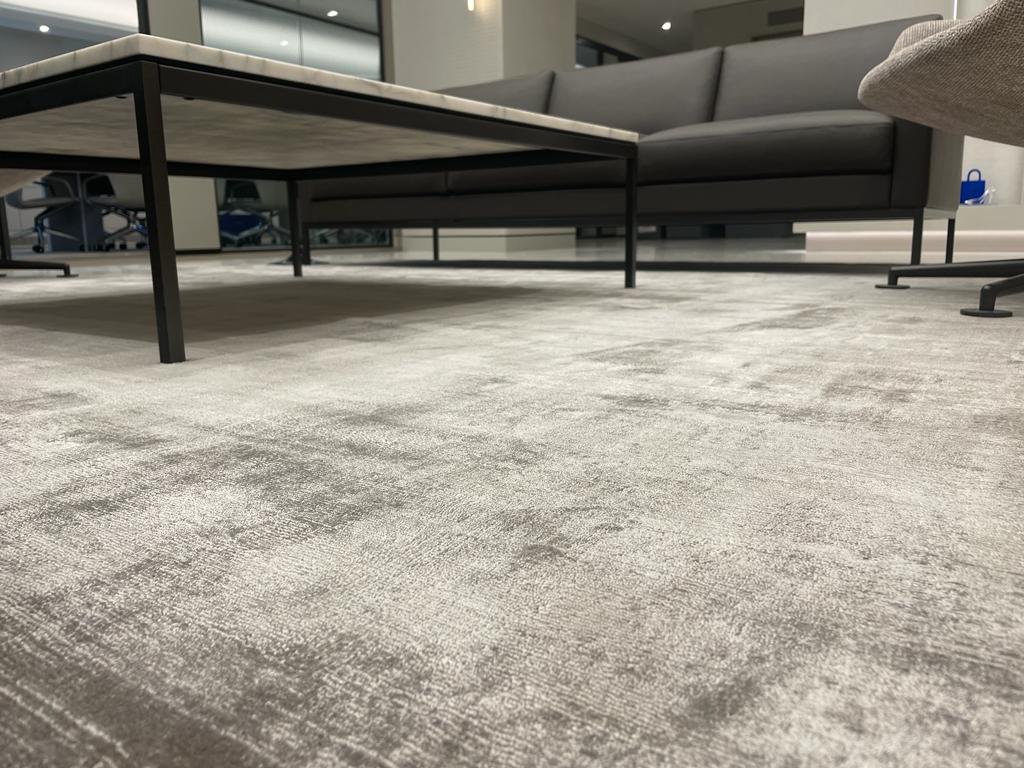
Rugs are more than just functional items; they are works of art that can transform a space, offering warmth, texture, and style. Whether you’re selecting rugs for boardrooms, lobbies, or living rooms, understanding the distinction between different manufacturing techniques is essential for finding the perfect piece that suits your needs. Among the most sought-after options are hand-knotted, hand-tufted, hand-loomed rugs. While these terms may sound similar, the techniques involved in their creation are vastly different, impacting their quality, appearance, lifespan, and price.
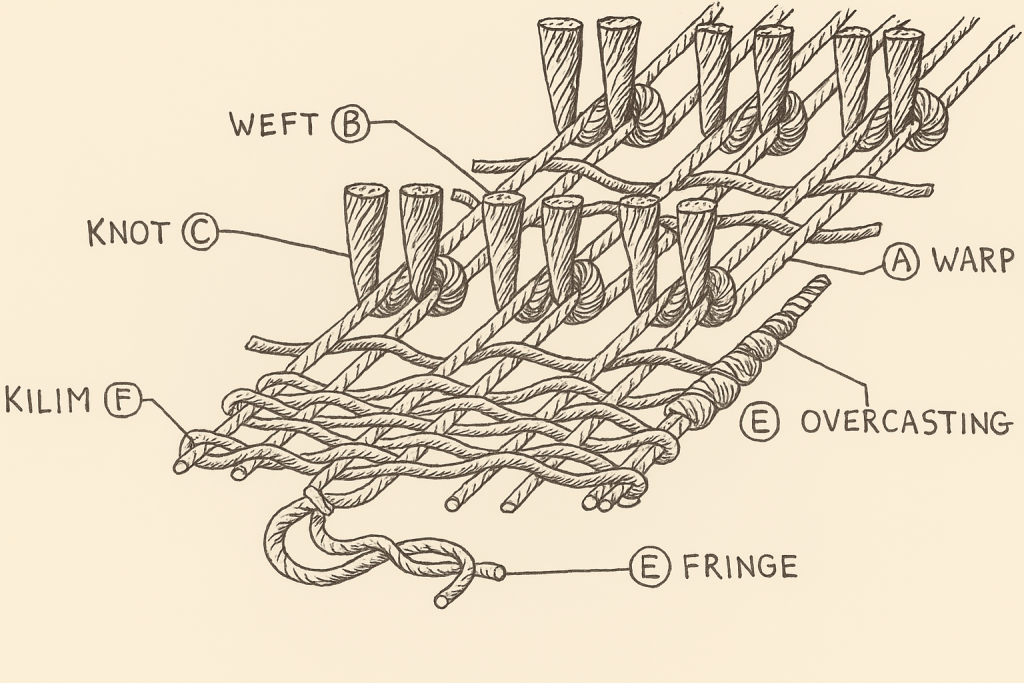
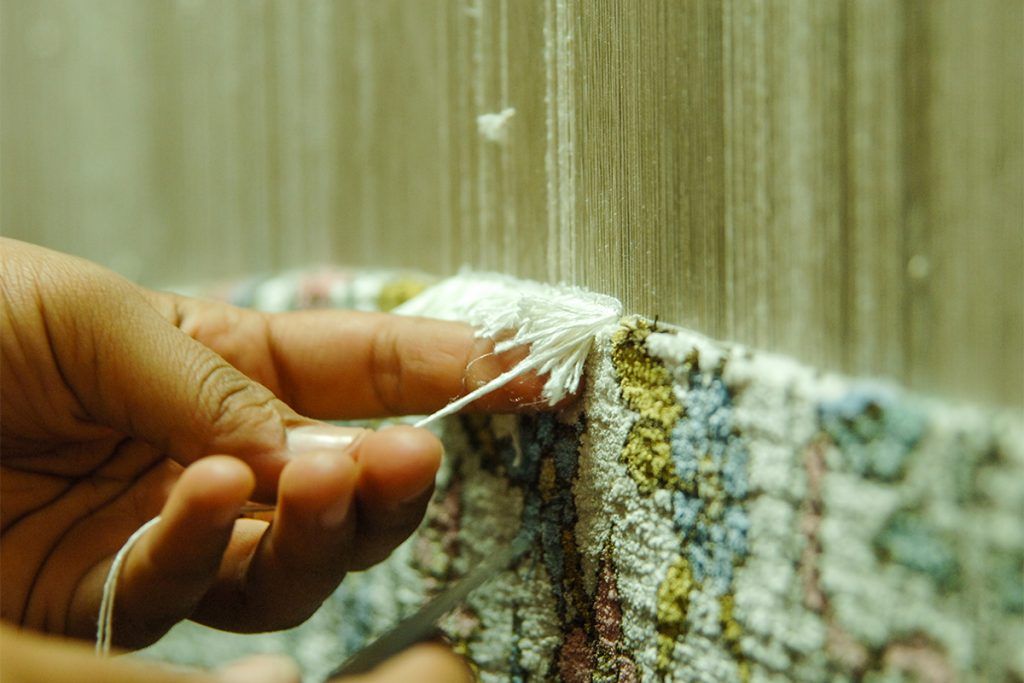
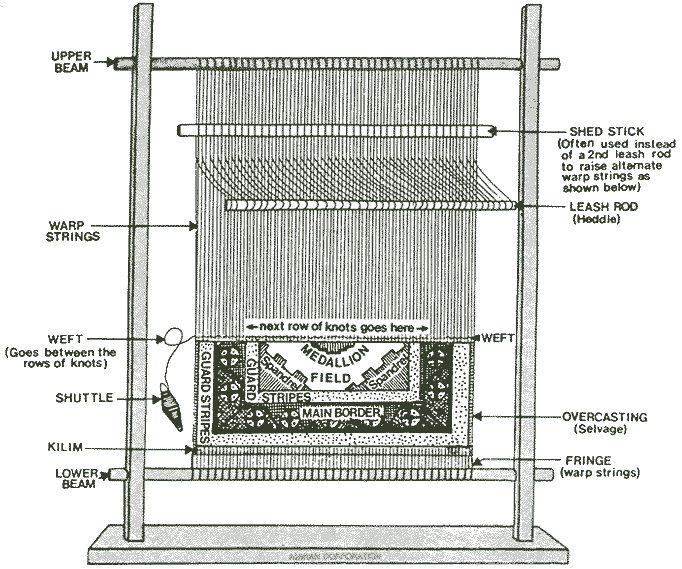
Hand-knotted rugs are considered the pinnacle of craftsmanship and artistry in the rug-making world. Crafted entirely by hand on a loom, each knot is tied individually by skilled artisans. These artisans can tie up to 10,000 knots per day. This meticulous process involves weaving vertical threads (warp) with horizontal threads (weft), creating intricate designs and patterns. Persian, Tibetan, and Oriental rugs are often hand-knotted, showcasing this ancient technique. Hand-knotting produces exquisite designs, making these rugs ideal for luxury bespoke rugs, bedroom rugs, and even acoustic rugs for boardrooms, where both elegance and functionality are essential.
Hand Knotted Method
Origins & History
The art of hand-knotting dates back thousands of years to ancient Persia (modern-day Iran) and Central Asia. It is believed the technique was developed by nomadic tribes who needed durable and portable flooring. Over time, these rugs evolved from functional pieces to symbols of status and culture, with elaborate designs that reflected regional traditions and artistry. Today, they remain a popular choice providing luxury and eco-conscious options not just for residential establishments, but bespoke rugs for hospitality interiors, and rugs for retail stores.
Yarn Materials
Commonly made from natural fibres like wool, silk, or a blend of both. Wool provides durability and softness, while silk adds a luxurious sheen.
Characteristics
Durability: Exceptionally durable due to tightly tied knots, lasting decades or even centuries with proper care.
Uniqueness: No two hand-knotted rugs are exactly alike, making them cherished heirlooms.
Time and Craftsmanship: The creation process is incredibly time-consuming, often taking months or years.
Hand-Knotted Rug Method
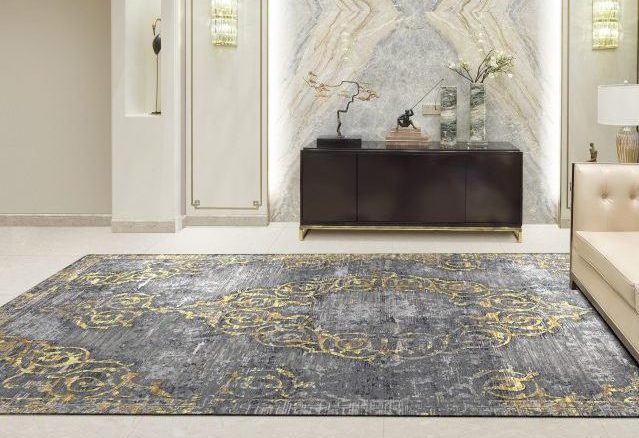
Bespoke Leila Hand Knotted Rug
Locations
Best Locations: These are ideal for luxurious settings such as rugs for hotel lobbies, upscale retail stores, executive offices and boardrooms, and high-end residential living areas.
Industry Sector: Hospitality, retail, and high-end residential sectors often favour these rugs.
Placement in Building: Best placed in areas with low to moderate foot traffic to preserve their delicate craftsmanship,
Pros:
Unparalleled durability and longevity
Exquisite craftsmanship and unique designs
High resale value
Cons:
Higher cost due to intensive labour
Longer production time
Best Cleaning and Maintenance Methods
Regular vacuuming (without a beater bar) is key to preventing dirt accumulation. Rotate the rug periodically to ensure even wear. Professional cleaning is recommended every 1-3 years, depending on use, to preserve its quality and longevity.
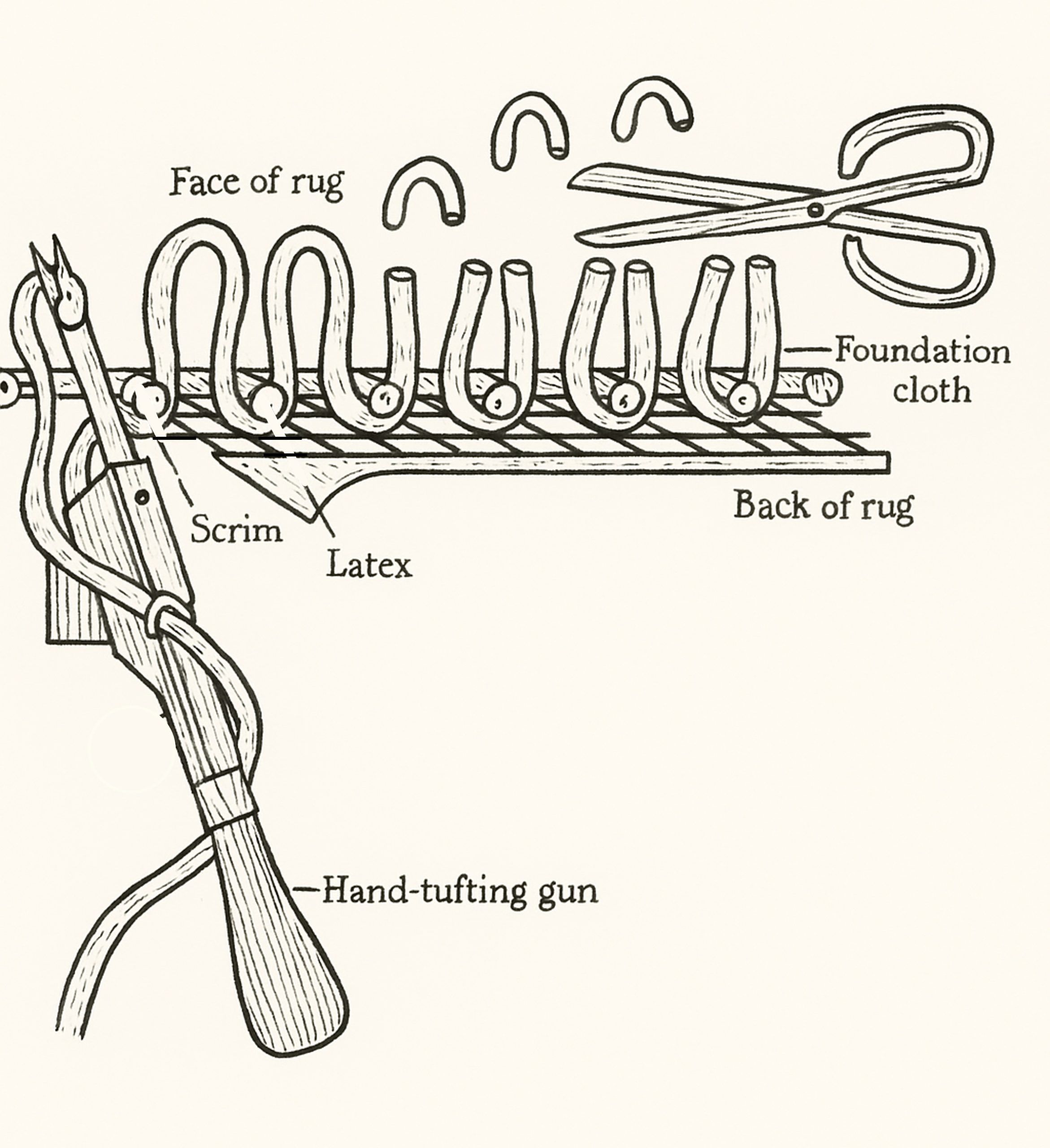
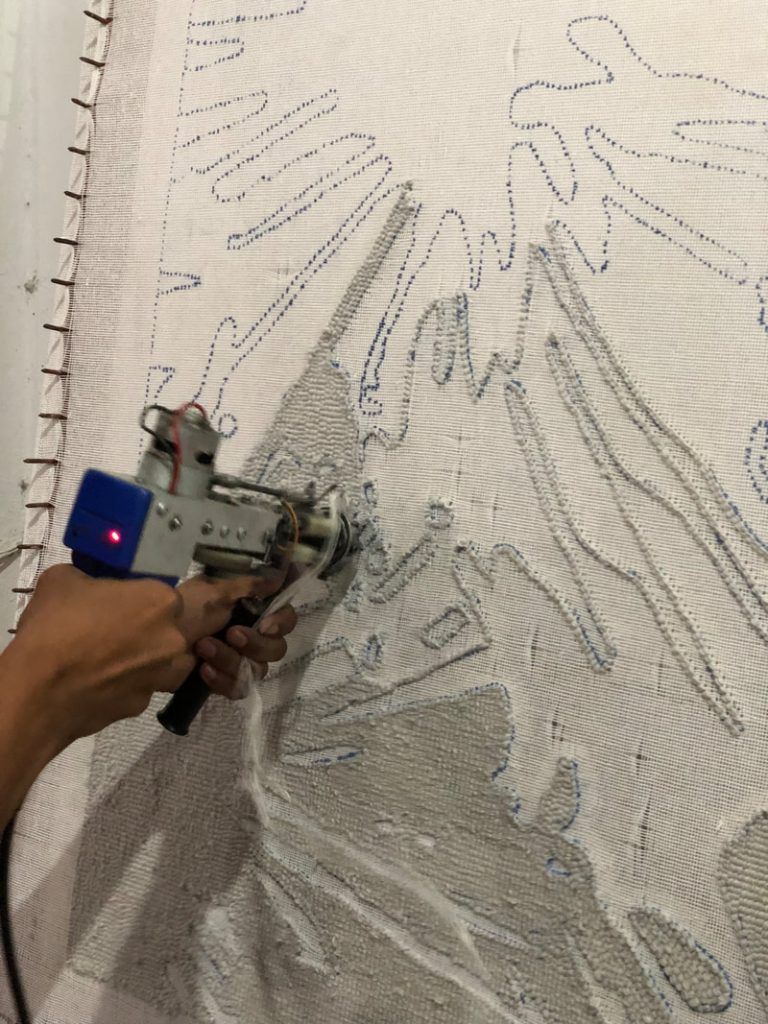
Hand-tufted rugs are created using a hand-held tool called a tufting gun. The artisan punches loops of yarn through a pre-stretched canvas or fabric base to form the rug’s pile. Once the design is complete, the back of the rug is reinforced with latex glue, and a backing material is applied. These rugs are versatile and can be customised as hand-tufted area rugs for collaboration spaces, meeting room rugs, and even commercial-grade area rugs
Origins and History
Hand-tufting is a relatively modern rug-making technique, originating in the 1930s in Europe and the United States. Developed as a faster and more affordable alternative to traditional methods, it gained popularity for its ability to replicate intricate designs at a lower cost. It allows for detailed designs, making it ideal for hand-tufted wool area rugs, rugs for lounges, or guest room rugs tailored to meet specific interior design needs.
Yarn Materials
Often made from wool, with either synthetic fibres (like Polyester) or natural fibres (like Tencel and Bamboo), mixing these fibres offer a matt and sheen blend. Wool is preferred for its durability, while synthetic or natural fibres add affordability, vibrant colours with a glossy silk effect.
Characteristics
Speed: Hand-tufted rugs are quicker to produce compared to hand-knotted rugs.
Variety: Mimics the appearance of hand-knotted rugs at a fraction of the cost.
Durability: Suitable for moderate-use areas like meeting rooms or boardroom rugs.
Hand-Tufting
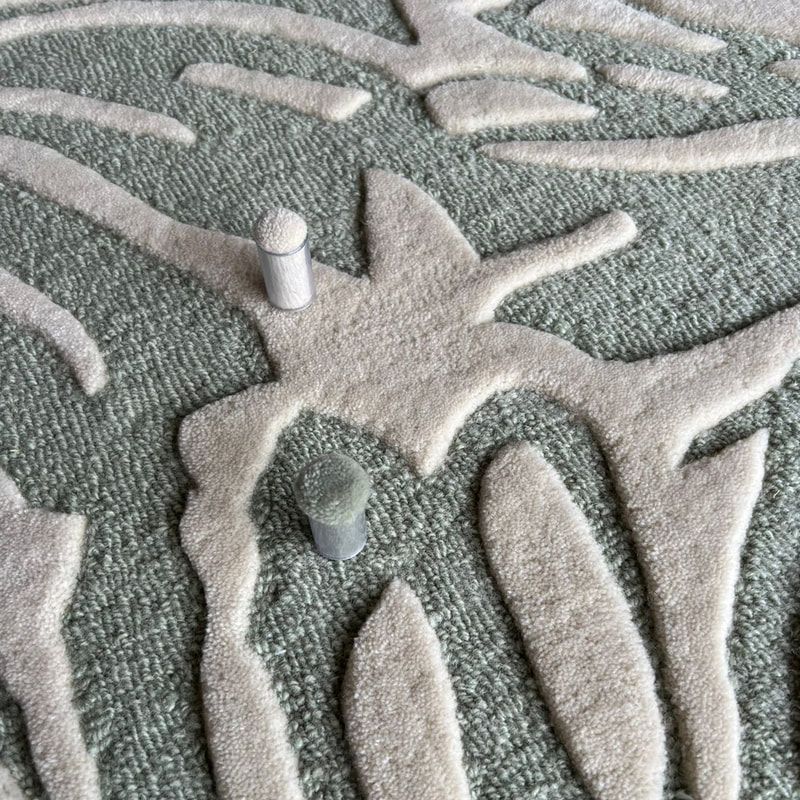
Hand-Tufted Cut & Loop Rug with Sculpting
Locations
Best Locations: Best suited for offices, conference rooms, or retail spaces that require stylish yet cost-effective flooring solutions.
Industry Sector: Corporate offices, education, and residential sectors benefit from hand-tufted rugs.
Placement in Building: Ideal for moderate-use areas like meeting rooms, libraries, or guest bedrooms.
Pros:
Affordable pricing
Quick production
Wide range of designs and patterns including corporate branded rugs.
Cons:
Shorter lifespan compared to hand-knotted rugs
Potential shedding of fibres
Best Cleaning and Maintenance Methods
Hand-tufted rugs require gentle yet consistent care to preserve their beauty and longevity. Regular vacuuming with a suction-only attachment helps remove dirt without damaging the fibers or backing. For spills, blot immediately with a clean cloth—never rub—and avoid harsh chemicals that could affect the dyes. If tufts sprout, trim them with scissors rather than pulling them out. To prevent indentations, occasionally rotate the rug and shift heavy furniture. For deep cleaning or stubborn stains, it’s best to consult a professional rug cleaner.
Hand-loomed rugs are produced on a traditional weaving loom, but unlike hand-knotted rugs, they do not involve tying individual knots. Instead, the loom is used to weave the yarns together quickly, often with some level of automation. These rugs are ideal for high end or casual spaces, including atriums, collaboration zones or living room rugs.
Origins and History
The technique of hand-looming has roots in ancient civilizations, such as Egypt and India, where looms were used to produce textiles for everyday use. Modern hand-loomed rugs continue to draw inspiration from these historical traditions while benefiting from refined processes.
Yarn Materials
Typically made from wool, cotton, viscose, or blends of these materials. Wool adds warmth, while cotton and viscose create softer, lightweight options.
Characteristics
Speed: The weaving process is faster than hand-knotting.
Affordability: More budget-friendly than hand-knotted rugs, making them a choice for colourful rugs in shops or retail interiors.
Moderate Durability: Sturdier than machine-made rugs but less durable than hand-knotted or hand-tufted options.
Burlington Hand Loomed Rug
Burlington Hand Loomed Rug
Locations
Best Locations: Suitable for dining areas, casual lounges, or shared spaces where durability isn’t the top priority.
Industry Sector: Residential and hospitality sectors often prefer hand-loomed rugs for informal spaces.
Placement in Building: Best placed in dining rooms, game rooms, or family lounges.
Pros:
Affordable price point
Offers an artisan touch
Ideal for casual spaces
Cons:
Designs may lack fine detail
Shorter lifespan
Best Cleaning and Maintenance Methods
Vacuum gently to avoid disturbing the fibres. For spills, blot immediately and clean using a damp cloth with mild detergent. Hand-loomed rugs may require occasional professional cleaning, depending on the material.
When selecting a rug, consider the following factors:
Purpose: For high-traffic areas like hallways, opt for durable hand-knotted rugs. Hand-woven rugs work well in casual spaces.
Budget: Hand-tufted and hand-loomed rugs provide cost-effective alternatives to hand-knotted pieces.
Style: Choose a rug that complements your interior design, whether it’s intricate, minimalist, or rustic.
Maintenance: Hand-knotted rugs may require professional cleaning, whereas hand-tufted or hand-woven options are easier to maintain.
Understanding the differences between hand-knotted, hand-tufted, and hand-woven rugs enables you to make informed decisions when investing in these beautiful pieces. Whether you need commercial office rugs for meeting rooms, bespoke rugs for retail interiors, or made-to-order rugs for hospitality settings, each type offers unique benefits tailored to various preferences and environments. Choose wisely, and your rug will not only enhance your clients space but also serve as a cherished addition for years to come.